Your Exclusive 10% Gift Awaits
Enjoy 10% off your order—our way of saying welcome! Use code PROHEALTH42 at checkout to unlock instant savings and start exploring our collection today.

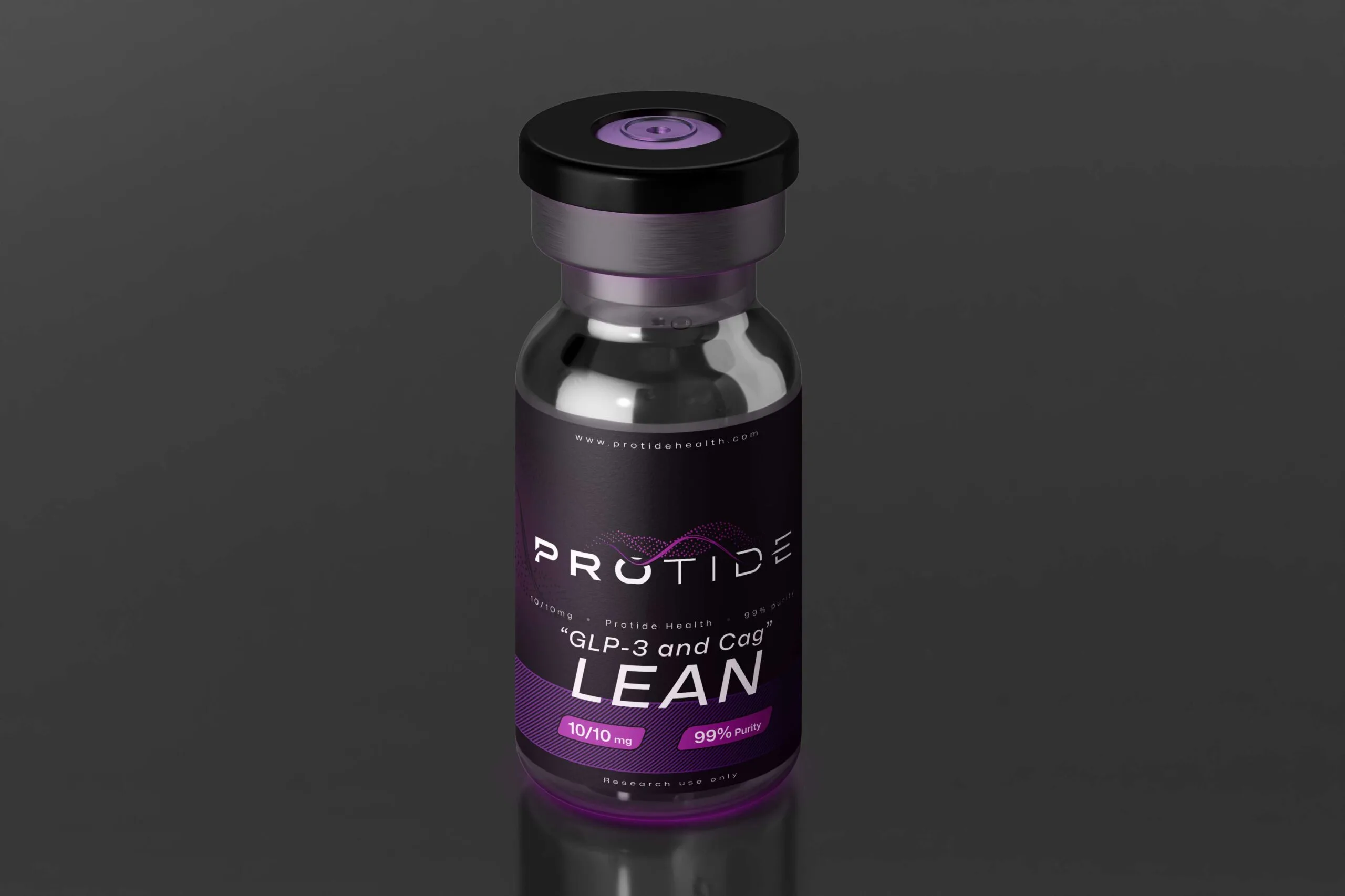
A clear, research-grounded breakdown of how these two peptides work, what makes their combination compelling, and what researchers need to know before studying them.
By Protide Health US | Updated 2026 | 8 min read
If you’ve been following the metabolic peptide research space, you’ve likely noticed growing interest in dual-mechanism approaches — combining peptides that act on different but complementary biological pathways rather than relying on a single target. The pairing of GLP-3 and Cagrilintide is one of the more scientifically interesting examples of this trend.
This article breaks down both peptides individually, explains why researchers are studying them together, and outlines the key mechanisms and current evidence you need to understand this blend in context. Whether you’re a researcher, a clinician following the literature, or someone in the early stages of exploring this category, you’ll leave with a clear and accurate picture of where the science stands.
Note: The information in this article is intended for educational and research purposes only. GLP-3, Cagrilintide, and related peptides are investigational compounds not approved for human therapeutic use by the FDA. All research must comply with applicable regulations.
Most people in metabolic research are familiar with GLP-1 (glucagon-like peptide-1) — the peptide at the center of a generation of diabetes and weight management drugs. GLP-3 (glucagon-like peptide-3) comes from the same proglucagon precursor gene but has a distinct structure and appears to act through different mechanisms.
GLP-3 is primarily produced in the gut’s enteroendocrine L-cells. While GLP-1 is well-characterized as an incretin hormone — stimulating insulin secretion and suppressing glucagon after meals — GLP-3’s functional role is still being defined. Early research suggests it may influence intestinal mucosal function and play a role in nutrient sensing, though it does not bind the GLP-1 receptor with the same affinity.
For those sourcing peptides for legitimate research, Protide Health’s GLP-3 peptide is available for study in controlled settings.
Cagrilintide is a long-acting analogue of amylin, a hormone co-secreted with insulin from pancreatic beta cells. Amylin works alongside insulin to regulate postprandial glucose by slowing gastric emptying, suppressing glucagon secretion, and signaling satiety to the brain.
Native amylin is notoriously prone to aggregation and has a very short half-life, limiting its research utility. Cagrilintide was engineered to address these liabilities — it is acylated for albumin binding, giving it a half-life suitable for once-weekly dosing in clinical settings.
Cagrilintide’s most prominent clinical footprint comes from the CagriSema trial program, where it was studied in combination with semaglutide. A 2023 phase 2 study published in The Lancet demonstrated substantial weight reduction at 32 weeks in adults with overweight or obesity — results that drew significant attention to the amylin pathway as a serious target in metabolic research. Additional peptide research resources can help contextualize amylin-related findings across the broader field.
The logic behind studying these two peptides together follows a pattern that has proven productive in metabolic research: targeting multiple pathways that converge on similar physiological goals — in this case, improved glucose regulation, satiety, and energy balance.
Consider how the two mechanisms differ:
| Feature | GLP-3 | Cagrilintide |
|---|---|---|
| Peptide family | Glucagon superfamily (proglucagon-derived) | Amylin analogue |
| Primary site of action | Gut enteroendocrine cells | Brain (area postrema, NTS) and pancreas |
| Main mechanism | Gut mucosal/nutrient-sensing effects (emerging) | Gastric emptying delay, central satiety signaling |
| Half-life (native) | Short | Long (~7 days via acylation) |
| Research maturity | Early-stage / emerging | Phase 2–3 clinical data available |
The hypothesis driving combination research is that acting on both peripheral gut signaling (GLP-3’s domain) and central appetite/glucose regulation (Cagrilintide’s domain) could produce effects that neither peptide achieves on its own. This is the same theoretical framework that made the GLP-1 plus amylin combination worth investigating — complementary signaling without direct receptor competition.
In preclinical and early-stage research contexts, combination peptide studies typically look for:
These endpoints inform whether a combination warrants further investment and what dose ratios are most biologically active.
One practical development in the peptide research space is the availability of pre-formulated blends that combine complementary peptides at defined ratios. Rather than sourcing, reconstituting, and dosing two separate compounds independently — with the associated variables and potential for inconsistency — a well-formulated blend allows researchers to work with a stable, characterized combination.
For those designing studies around the GLP-3 and Cagrilintide combination, Protide Health’s GLP-3 / Cagrilintide Lean Blend (10/10mg) provides a ready-to-use research option in a single formulation, which can simplify protocol design and reduce preparation variability.
As interest in multi-peptide research grows, a few persistent misunderstandings are worth addressing directly.
Combination approaches are compelling, but complexity isn’t inherently superior. The value of a blend depends on whether the mechanisms are genuinely complementary, whether dosing can be optimized for each component, and whether the combination introduces new off-target effects. Rigorous study design matters more than the number of peptides involved.
The CagriSema clinical data is informative context, but it doesn’t map directly onto GLP-3 combination models. GLP-3 is a different peptide from semaglutide, acting through different mechanisms. Researchers should treat the literature as background, not a blueprint.
While some formulations in the supplement and wellness space make claims that outrun the science, in a legitimate research context, co-formulated peptides serve a practical purpose: they reduce variability, simplify handling, and allow for consistent ratio testing across experimental conditions. The value is procedural, not merely commercial.
If you’re planning to incorporate either peptide into a research protocol, a few practical considerations will help you design a more rigorous study:
For deeper background on handling and protocol design, Protide Health’s peptide education resources offer practical guidance for researchers new to this category: visit Protide Health for more.
The GLP-3 and Cagrilintide peptide blend sits at an interesting intersection: one peptide with an established clinical profile and well-characterized mechanisms, paired with a peptide whose full biological role is still being mapped. That asymmetry is precisely what makes this combination scientifically productive to study — the complementary, non-overlapping pathways offer a legitimate basis for dual-mechanism research.
As the metabolic peptide field continues to move toward combination approaches, rigorous research on pairings like this one will be essential for building an evidence base that goes beyond single-target models. Good science in this area starts with well-characterized compounds, careful protocol design, and a clear-eyed reading of existing literature.
For researchers ready to explore this combination, explore the GLP-3 / Cagrilintide Lean Blend at Protide Health — formulated to research-grade standards with full documentation for qualified investigators.
This article is part of Protide Health’s ongoing series on peptide research science. You may also find helpful background in our broader peptide education guides.
© 2025 Protide Health | protidehealthus.com
For research use only. Not intended for human therapeutic use. Consult applicable regulations before use.